Published: June 30, 2026. Specifications sourced from Anbernic’s official product page and Pocket Retro Gaming’s January 2026 review. Performance impressions reflect publicly reported testing; we recommend verifying current Eden/Citron compatibility before purchase given the fast-moving emulator landscape.
Anbernic RG557: Quick Overview
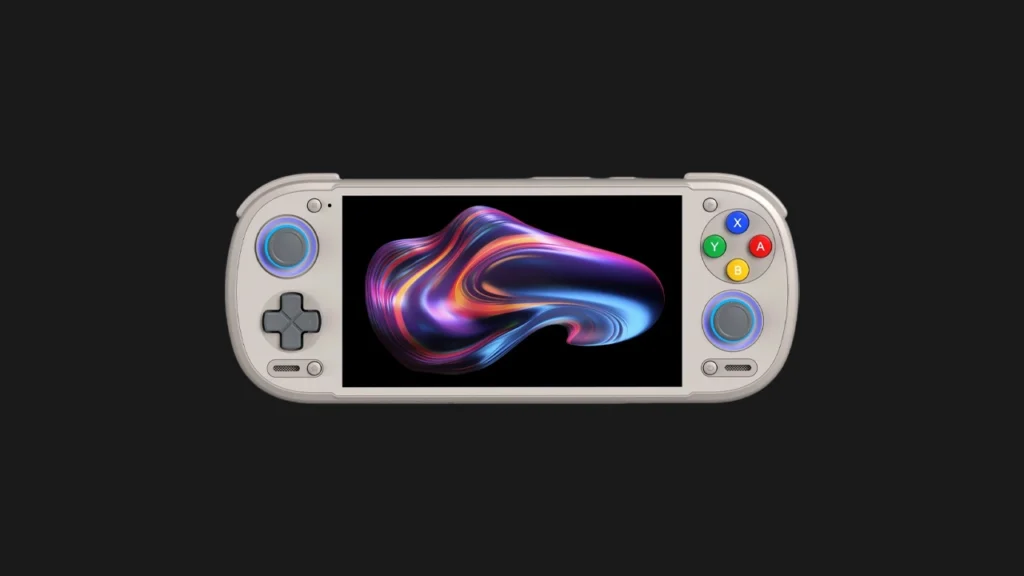
The Anbernic RG557 launched as the brand’s flagship large-screen Android handheld for 2026, stepping up from the well-regarded RG556 with a newer MediaTek Dimensity 8300 chipset, larger battery, and refined ergonomics. It positions itself as a hybrid device — equally capable as a dedicated retro emulation machine and a modern Android gaming handheld for cloud streaming and current mobile titles.
Full Specifications
- Display: 5.48-inch AMOLED, 1920×1080 resolution, OCA full lamination
- Chipset: MediaTek Dimensity 8300, 4nm process
- CPU: Octa-core — 1x Cortex-A715 @ 3.35GHz + 3x Cortex-A715 @ 3.20GHz + 4x Cortex-A510 @ 2.2GHz
- GPU: Mali-G615 MC6
- RAM / Storage: 8GB+128GB or 12GB+256GB LPDDR5X / UFS 4.0
- OS: Android 14
- Connectivity: Wi-Fi 6E, Bluetooth 5.3
- Battery: 5,500mAh, rated 8 hours, 27W charging
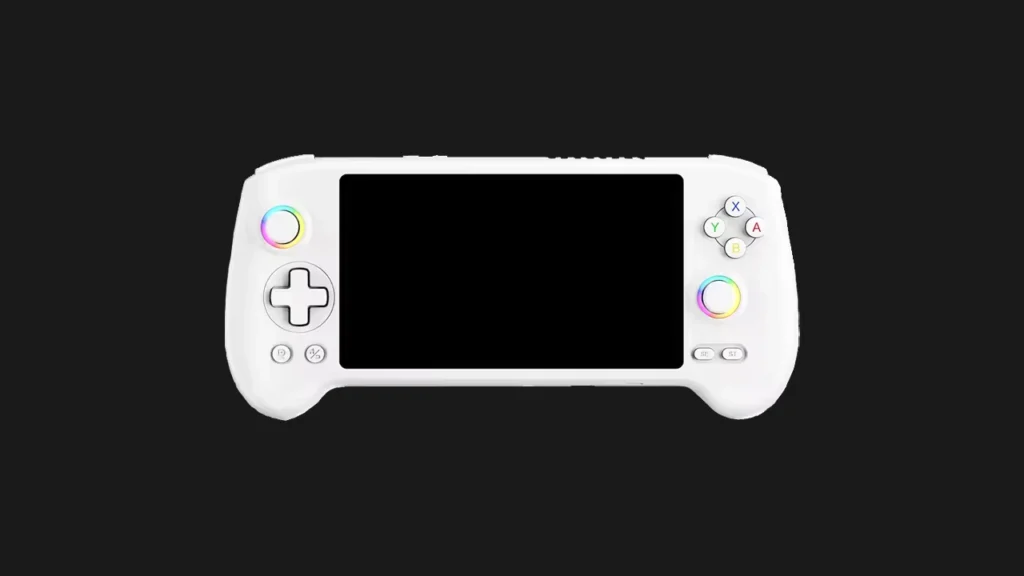
- Controls: Hall-effect analog sticks with RGB lighting, linear Hall-effect triggers, gyroscope, vibration motor
- Dimensions: 8.78 x 3.5 x 0.59 inches, 347g
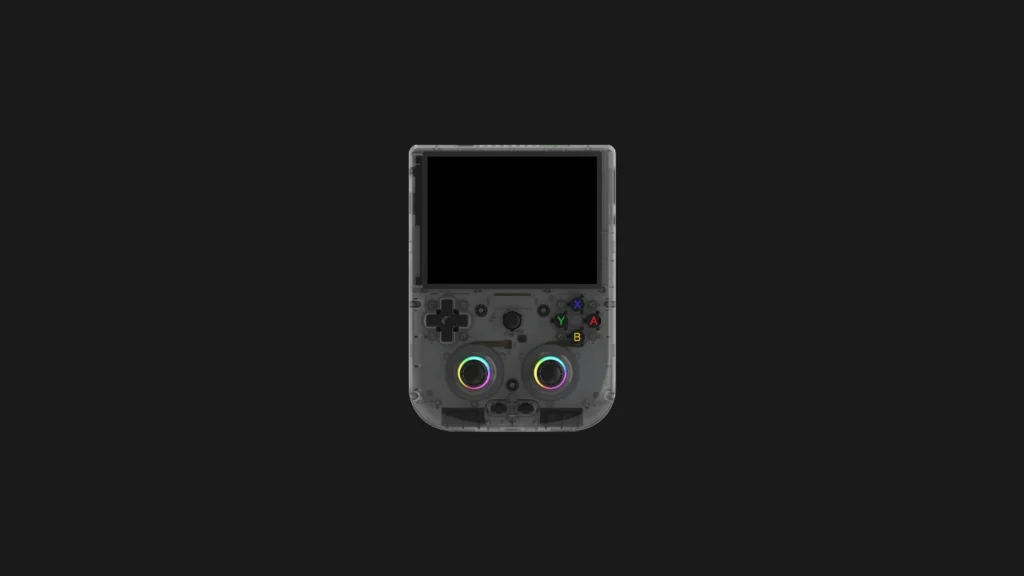
- Colours: White, Transparent Purple
Display: A Genuine Highlight
The 5.48-inch AMOLED panel at full 1920×1080 resolution is one of the better screens in Anbernic’s lineup. True blacks and high contrast make both retro pixel art and modern game UIs look excellent. The 60Hz refresh rate is the one area where the RG557 trails Snapdragon competitors like the Retroid Pocket 6, which offers 120Hz — for fast-paced action this is noticeable, though for the bulk of retro and turn-based gaming it’s a non-issue.
Controls: Anbernic’s Best Effort Yet
Hall-effect analog sticks with RGB lighting and linear Hall-effect triggers represent Anbernic’s most premium control implementation to date. The progressive trigger feedback is genuinely useful for racing and shooting genres where analog trigger pressure matters. The added gyroscope enables motion control support in compatible Android titles — a feature more commonly found on dedicated gaming phones than retro-focused handhelds.
Dimensity 8300 vs Snapdragon 8 Gen 2: How Do They Compare for Switch Emulation?
This is the critical question for readers of this site. The Dimensity 8300 is a strong upper-mid-range chipset, but it sits below the Snapdragon 8 Gen 2 (Retroid Pocket 6, AYN Odin 2 Portal Pro) in raw emulation performance — particularly for Vulkan-heavy workloads.
The practical reality: Eden and Citron’s optimisation work has historically concentrated on Qualcomm Adreno GPUs rather than Mali GPUs (which the Dimensity 8300’s Mali-G615 uses). This means the RG557, despite respectable raw specs, will generally underperform a Snapdragon 8 Gen 2 device on demanding Switch titles, even though on paper the chips are roughly comparable in general computing benchmarks.
Pocket Retro Gaming’s own assessment describes the RG557 as capable of emulating “demanding platforms like PS2, Wii, and select Switch titles” — the word “select” is doing important work there. This is consistent with community experience: the RG557 handles lighter, less GPU-intensive Switch games (2D titles, turn-based RPGs, older first-party titles) reasonably well, but struggles more than Snapdragon 8 Gen 2 devices on open-world titles like Tears of the Kingdom or Pokemon Scarlet/Violet.
What the RG557 Excels At
Where the RG557 is unambiguously strong: PS2 and GameCube emulation via standalone emulators (AetherSX2, Dolphin), which are less GPU-driver-dependent than Switch emulation and run excellently on the Dimensity 8300. Wii emulation is similarly solid. For players whose primary interest is the PS2/GameCube/Wii generation with Switch emulation as a secondary bonus rather than primary use case, the RG557 is a genuinely strong choice.
The RixelHK game downloader integration mentioned in Anbernic’s own marketing supports over 30 kinds of emulators out of the box, simplifying setup for users who don’t want to manually install and configure each emulator separately.
Battery Life and Connectivity
The 5,500mAh battery rated for 8 hours is a genuine strength — exceeding the Retroid Pocket 6’s 5,000mAh capacity and resulting in noticeably longer sessions for lighter emulation workloads. Wi-Fi 6E support also gives it a connectivity edge for cloud gaming streaming quality, comparable to the higher-end devices in this price bracket.
RG557 vs RG556: Should You Upgrade?
The RG556 (Unisoc T820, 5.48-inch AMOLED 60Hz, similar form factor) remains available at roughly 25% lower cost according to Pocket Retro Gaming’s comparison. The RG557’s Dimensity 8300 represents a genuine performance step up over the T820, along with improved connectivity (Wi-Fi 6E vs Wi-Fi 5) and a larger battery. For Switch emulation specifically, the gap between the two isn’t transformative — both sit below Snapdragon 8 Gen 2 territory — but the RG557 is the more capable device overall if budget allows.
RG557 vs Retroid Pocket 6: The Real Choice
For readers of this site whose primary interest is Switch emulation specifically, the Retroid Pocket 6’s Snapdragon 8 Gen 2 remains the stronger recommendation due to mature Adreno Vulkan driver support across Eden, Citron, and Kenji-NX. The RG557 is the better pick if your interests skew toward PS2/GameCube/Wii with Switch as a secondary consideration, or if you specifically value the larger battery and Wi-Fi 6E connectivity for a more general-purpose Android gaming handheld.
Verdict
The Anbernic RG557 is a polished, well-built flagship handheld with genuine strengths in display quality, battery life, and pre-2024 console emulation. For Switch emulation as the primary use case, Snapdragon 8 Gen 2 devices remain the better-optimised choice in 2026 — but as a versatile, premium all-rounder with Switch emulation as a capable secondary feature, the RG557 earns a place on the shortlist.