The Nintendo Switch 2: Hardware, Features, and Why Emulation Is Harder This Time
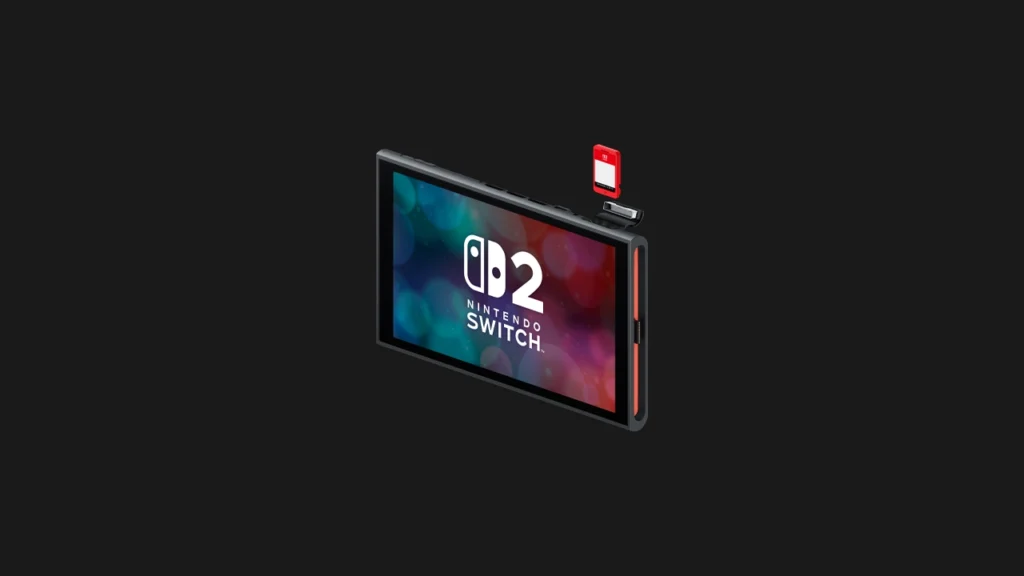
Nintendo launched the Switch 2 in June 2025 as the successor to its landmark hybrid console. It maintains backward compatibility with most Switch 1 physical and digital games, introduces GameChat (group voice and video calling via the built-in microphone), adds GameShare for local multiplayer across different systems with only one copy of a game, and delivers 4K output at 60Hz docked or 1080p at 120Hz in handheld mode.
For the Switch emulation community, the Switch 2 represents both a target and a significant challenge — one considerably harder than the original Switch was in 2017. Here’s an honest, up-to-date look at where things stand in mid-2026.
Nintendo Switch 2 Hardware Specifications
- SoC: Custom Tegra T239, designed by NVIDIA
- CPU: 8x ARM Cortex-A78C cores
- GPU: NVIDIA Ampere-based with 1,536 CUDA cores
- RAM: 12GB LPDDR5X
- Storage: 256GB internal (significantly faster than Switch 1)
- Display (handheld): 1080p at 120Hz with VRR (variable refresh rate) support
- Output (docked): Up to 4K at 60Hz with HDR10
- Controller: New Joy-Con with magnetic attachment and mouse-mode functionality on flat surfaces
- New features: GameChat microphone, GameShare local multiplayer sharing, expanded kickstand across full device width
- Backward compatibility: Most Nintendo Switch 1 physical and digital games
The Ampere GPU architecture — the same generation as NVIDIA’s RTX 30 series desktop cards — is a substantial leap over the Switch 1’s Maxwell-era GPU. This hardware is modern enough that emulating it requires resources beyond what most current Android handhelds can comfortably provide.
Why Switch 2 Emulation Is Harder Than Switch 1 Was
The original Switch launched with a Tegra X1 SoC — the same chip used in the NVIDIA Shield TV, a consumer Android device. Emulator developers had access to extensive public documentation for the Tegra X1’s GPU, which dramatically accelerated reverse engineering. By 2019, Yuzu and Ryujinx had achieved playable performance on high-end PCs. By 2024, Android Switch emulation was mature enough for casual users on Snapdragon 8 Gen 2 handhelds.
The Switch 2’s custom Tegra T239 has no direct consumer equivalent. There is no ready-made reference documentation. Developers must reverse-engineer the hardware architecture from scratch while Nintendo is actively shipping and selling the device.
Additionally, Nintendo significantly upgraded the Switch 2’s security model. The Tegra X1’s well-documented vulnerabilities — including the fusée gelée RCM exploit that enabled Switch 1 modding — were patched in later Switch 1 hardware revisions and are absent from Switch 2. Without an established hardware exploit, developers cannot examine the Switch 2’s internals with the depth that enabled rapid Switch 1 emulation progress. Some Switch 2 hardware security researchers have warned the timeline could be a decade or longer as a result.
Current Switch 2 Emulation Projects (Mid-2026)
Two projects have publicly visible presence targeting Switch 2 emulation as of June 2026:
Pound: Describes itself as an “early-stage emulator.” The project page carries a bold all-caps warning: “IMPORTANT: THIS PROJECT WILL NOT BE READY FOR A DECADE MINIMUM.” As of mid-2026, Pound can boot into Switch 2 firmware with significant visual artifacts but cannot run commercial games. Development pace is slow.
oboromi: Describes itself as a “work-in-progress emulator foundation.” Similarly early-stage, with no commercial game compatibility as of mid-2026.
The Emulation General Wiki confirms plainly: “THERE ARE CURRENTLY NO EMULATORS FOR THIS DEVICE THAT CAN RUN COMMERCIAL GAMES AND/OR SOFTWARE.”
A third project called NxEmu surfaced in early 2026 claiming to be built from the ground up without Yuzu or Ryujinx code. It is in very early alpha stages.
All three projects face an additional challenge beyond technical complexity: Nintendo’s aggressive February 2026 DMCA enforcement campaign specifically targeted Switch emulation infrastructure, and Switch 2 projects operating publicly face even greater legal exposure than Switch 1 projects.
Realistic Timeline for Switch 2 Emulation
Developer voices within the emulation scene have specifically cautioned that Switch 2 security improvements could push the timeline toward a decade or more — a significant departure from the rapid Switch 1 emulation trajectory. Community estimates consistently range from “several years minimum” to “a decade or longer.” Here’s a realistic framework:
- 2026: Foundation-level reverse engineering only. No commercial games playable publicly. Projects exist but are proof-of-concept at best.
- 2027–2028: First homebrew software potentially running. Isolated commercial game boots becoming possible in private research contexts. Still not practically useful for gaming.
- 2029–2031: If development continues unimpeded — a significant conditional given Nintendo’s legal posture — early-adopter territory for enthusiasts. Some simpler Switch 2 titles might become playable with significant configuration effort.
- Beyond 2031: Broad commercial game compatibility requires successful reverse engineering, public exploit discovery, and sustained development while navigating Nintendo’s increasingly aggressive legal stance.
These are optimistic estimates that assume no major legal disruptions to development. Legal challenges and hardware security complexity could extend each phase significantly.
What This Means for Android Handheld Gamers Today
The practical implication is straightforward: if your goal is to play your existing Switch library on an Android handheld in 2026, Switch 1 emulation is the answer — not Switch 2 emulation.
Eden continues active development targeting the Switch 1 library: thousands of titles spanning 2017–2025. Switch 1 emulation on a Snapdragon 8 Gen 2 device like the Retroid Pocket 6 handles the vast majority of that library competently. No Switch 2 emulation project comes remotely close to that level of maturity, and none will for years.
The Switch 2 itself is also backward-compatible with Switch 1 games via Nintendo’s official hardware. Players who want to play both Switch 1 and Switch 2 titles on real hardware can do so on Switch 2. Switch 1 emulation covers the legacy library independently on Android handhelds for players who already own those games and want to play them without the original hardware.
Switch 2 vs Switch 1: What You Can Play Right Now
Switch 1 games on Android emulation (2026): Thousands of titles, excellent compatibility on Snapdragon 8 Gen 2+ hardware, actively maintained emulators (Eden), improving with every update. This is the realistic choice for Android handheld gaming today.
Switch 2 games on Android emulation (2026): Zero commercial titles playable. Not a realistic option now or in the near future.
The Switch emulation community continues to do outstanding preservation and accessibility work on the Switch 1 library. That work is what matters for Android handheld gamers in 2026.